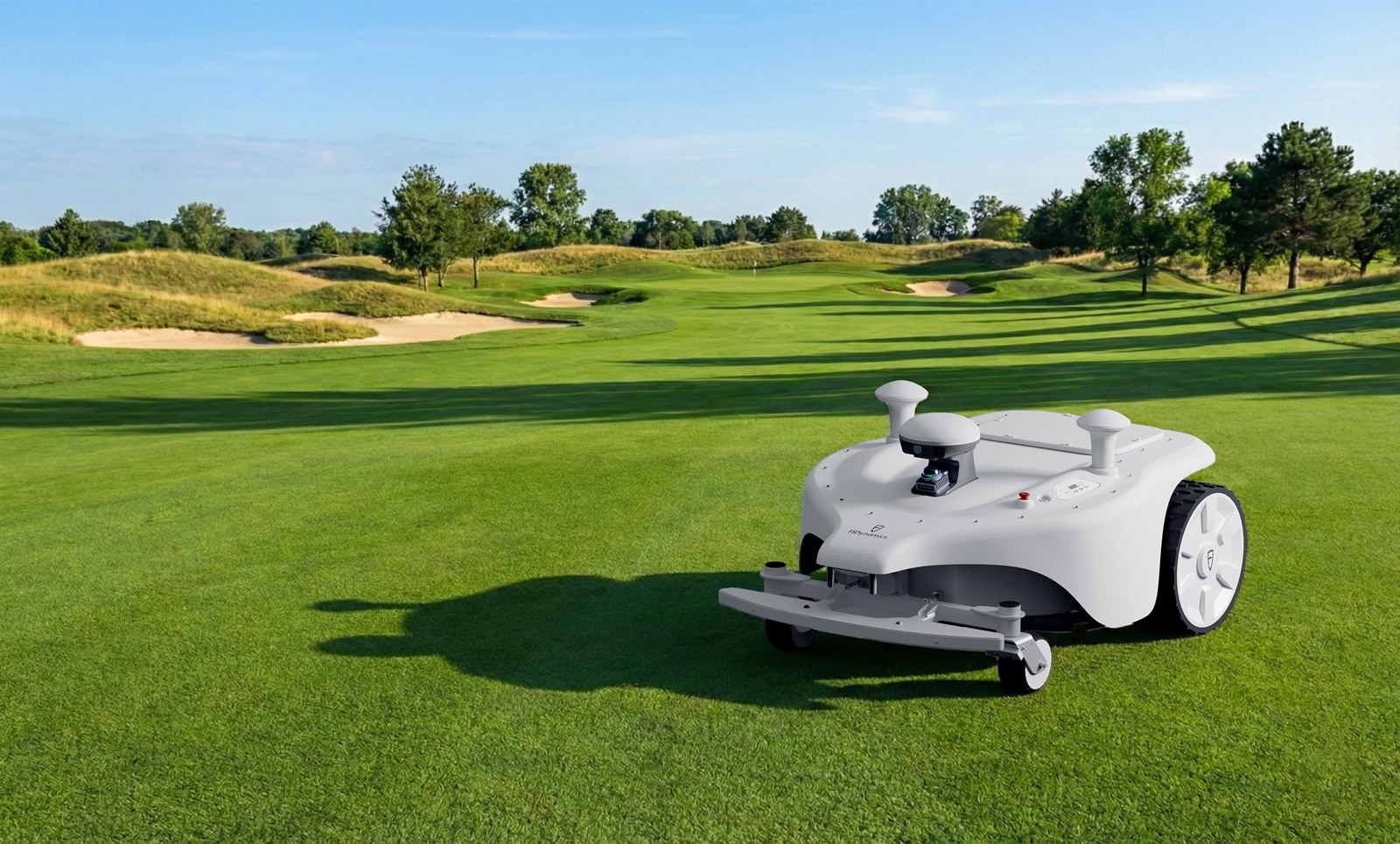
Maintaining large grounds to a consistently high standard can be a demanding responsibility. Extensive estates, sports facilities, public parks, institutional grounds and other sizeable landscapes may contain thousands of square metres of grass, awkward boundaries, slopes, trees, pathways and areas that require frequent attention. Traditional mowing methods can consume substantial amounts of time and labour, particularly during periods of rapid grass growth.
This is where robotic lawn mowers can provide a practical alternative. Designed to operate autonomously, robotic lawn mowers can maintain grass on a regular schedule with considerably less direct supervision than conventional mowing equipment. Modern systems can be suitable for extensive areas and challenging terrain, with navigation technology, obstacle detection and intelligent scheduling helping them work methodically across defined mowing zones.
For managers responsible for demanding grounds, the attraction of robotic lawn mowers is not simply that they can cut grass without a person sitting behind the controls. Their greatest advantage is the way they can change the entire approach to routine turf maintenance.
Consistent mowing across extensive areas
One of the biggest challenges associated with large grounds is maintaining consistency. When grass is cut manually, the frequency of mowing can depend on staff availability, weather conditions, equipment availability and competing maintenance priorities. As a result, some areas may receive attention more frequently than others.
Robotic lawn mowers can help overcome this problem by operating according to a predetermined schedule. Instead of waiting until the grass becomes noticeably long before carrying out a substantial mowing session, robotic lawn mowers are generally designed to cut smaller amounts of growth more frequently.
This approach can create a more consistently maintained appearance across extensive lawns. It can also make it easier to maintain a desired cutting height throughout the growing season, rather than repeatedly allowing grass to become long before cutting it back.
For large grounds where presentation matters, this consistency can be particularly valuable. A uniformly maintained lawn contributes to the overall appearance of an estate, sports area, park or landscaped property without requiring staff to dedicate large portions of their working week to routine mowing.
Significant reductions in manual mowing time
Mowing a large area manually can take many hours. Even where ride-on machinery is used, an operator still needs to be present throughout the task. The time involved can become particularly significant when grass areas need to be maintained several times a week during periods of strong growth.
Robotic lawn mowers operate differently. Once the mowing area, schedule and operating parameters have been established, the machines can work independently and return to a charging point when required. This allows personnel who would otherwise spend considerable time mowing to concentrate on other responsibilities.
The result is not necessarily a reduction in the importance of grounds staff. Instead, robotic lawn mowers can allow skilled personnel to spend more time on work that requires human judgement, such as landscaping, turf assessment, planting, repairs, inspections and general site management.
For organisations responsible for extensive grounds, this can make available working hours considerably more productive.
Better use of labour and resources
Large-scale grounds maintenance can involve numerous recurring tasks, with mowing often representing one of the most repetitive. Robotic lawn mowers can take over much of this repetitive activity while staff remain available for more varied duties.
This can be especially useful when a grounds team is responsible for several areas at once. Instead of allocating workers and machinery to routine mowing for prolonged periods, robotic lawn mowers can maintain suitable grass areas in the background.
There can also be financial benefits over the longer term. Although the initial investment in robotic lawn mowers can be higher than purchasing some conventional equipment, the overall cost of ownership needs to be considered alongside labour requirements, energy consumption, servicing and operating time. Reduced reliance on continuous manual operation can contribute to improved efficiency over the lifespan of the equipment.
Effective management of difficult terrain
Large grounds are rarely perfectly flat and uniform. Slopes, uneven surfaces, narrow passages and areas surrounding trees or landscaping features can make conventional mowing more complicated.
Certain robotic lawn mowers are specifically designed to cope with demanding terrain. Depending on the equipment selected, features such as high-traction wheels, all-wheel drive and advanced navigation can help robotic lawn mowers negotiate slopes and uneven areas more effectively.
However, suitability remains important. Not every robotic lawn mower is designed for every type of terrain, so the characteristics of the site need to be assessed carefully. Steep gradients, soft ground, exposed roots, deep ruts and complicated landscaping can all affect performance. Selecting equipment appropriate to the conditions is therefore essential when dealing with demanding grounds.
When correctly matched to the environment, robotic lawn mowers can reduce the amount of difficult manual mowing required and make challenging areas easier to maintain consistently.
Reduced disruption during mowing
Noise can be an important consideration on large grounds that are used by the public, residents, visitors, students, sports participants or staff. Conventional mowing machinery can generate significant noise, particularly when several machines are operating.
Robotic lawn mowers generally operate much more quietly. This means mowing can potentially take place with less disturbance to people using nearby areas. It can be particularly advantageous for sites where maintaining a peaceful atmosphere is important.
Quiet operation also creates greater flexibility around scheduling. Depending on site requirements and safety arrangements, robotic lawn mowers may be able to carry out maintenance at times when conventional mowing would be inconvenient because of noise.
This can help grounds managers maintain lawns without allowing mowing activities to dominate the daily experience of people using the surrounding environment.
Improved turf health through frequent cutting
The way grass is cut can influence its appearance and general condition. Conventional mowing often involves removing a relatively large amount of growth at intervals. Robotic lawn mowers instead tend to work through frequent, lighter cutting.
The small clippings produced during regular mowing can remain on the lawn and break down naturally, returning nutrients to the turf. Frequent cutting can also help keep grass at a more stable height, supporting a neat appearance throughout the growing season.
For extensive grounds, this can be particularly useful because the maintenance regime becomes continuous rather than being based around occasional intensive mowing sessions. The result can be a lawn that looks consistently cared for rather than one that alternates between freshly cut and noticeably overgrown.
Efficient operation across complex layouts
Large grounds frequently contain more than one straightforward lawn. There may be separate grass areas divided by paths, planted borders, buildings or other features.
Modern robotic lawn mowers can offer navigation systems capable of managing defined zones and complex layouts. Depending on the system, boundaries can be established through physical wires or virtual mapping technology, allowing the mower to remain within designated areas.
This provides flexibility for sites that have multiple mowing zones. Rather than treating a large property as a single uninterrupted expanse, robotic lawn mowers can be configured to work within particular sections according to the requirements of the grounds.
Advanced navigation can also help reduce unnecessary travelling and improve the completeness of mowing coverage. This is particularly important on large sites, where missed areas can otherwise become noticeable and require additional manual attention.
Lower impact on the ground
The weight and operating characteristics of mowing equipment can influence the condition of turf, particularly when the ground is soft after wet weather.
Many robotic lawn mowers are relatively lightweight compared with large conventional mowing machinery. Their repeated movement across the lawn can therefore offer an alternative to sending heavier equipment over the same areas.
This can be beneficial on grounds where protecting the quality of the turf is a priority. Reducing heavy traffic can help minimise the risk of rutting and surface damage, although operating conditions and the characteristics of individual robotic lawn mowers must always be considered.
The ability to carry out regular maintenance without repeatedly deploying large machinery can form an important part of a more careful approach to turf management.
Greater flexibility during busy periods
Grass growth can accelerate rapidly during spring and summer, creating pressure on grounds teams. If mowing is delayed, the amount of work required can increase quickly.
Robotic lawn mowers can provide a more flexible way of responding to these changing conditions. Their schedules can be adjusted to increase or reduce mowing frequency according to seasonal requirements, helping grounds managers maintain greater control over routine maintenance.
This can be particularly valuable during periods when staff are already occupied with other seasonal tasks. Instead of adding more manual mowing hours, robotic lawn mowers can continue performing routine cutting according to their programmed requirements.
A more efficient long-term maintenance strategy
The most important advantage of robotic lawn mowers for large and demanding grounds may be the cumulative effect of all these improvements.
Robotic lawn mowers can provide consistent cutting, reduce repetitive labour, operate quietly, cope with appropriately challenging terrain and support a more regular approach to turf care. They can also free grounds personnel to concentrate on tasks that cannot easily be automated.
They are not a universal replacement for conventional equipment. Edges, extremely difficult terrain, obstacles, overgrown areas and specialised maintenance may still require human intervention and other machinery. Careful site assessment, installation and ongoing supervision remain important.
Nevertheless, for suitable areas, robotic lawn mowers can become an effective part of a modern grounds-maintenance strategy. As navigation, battery technology and autonomous operation continue to develop, their usefulness for larger and more complicated landscapes is likely to increase.
For anyone responsible for extensive grounds, the question is therefore not simply whether robotic lawn mowers can cut grass. The more important consideration is whether they can make the entire maintenance operation more consistent, efficient and manageable. For appropriately selected sites, the answer can be yes. By handling repetitive mowing with minimal supervision, robotic lawn mowers can help transform a labour-intensive routine into a more streamlined and sustainable approach to maintaining demanding grounds.