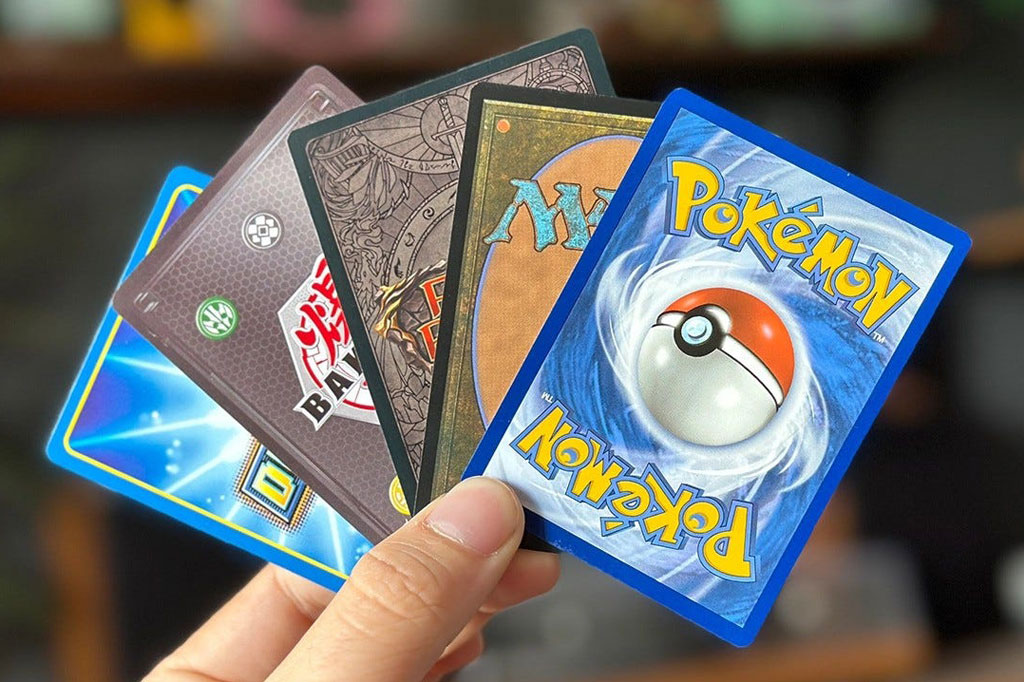
Trading card games have developed into complex digital ecosystems where players, developers, collectors and enthusiasts increasingly rely on accurate and accessible information. From card names and descriptions to set details, rarity, formats and other useful attributes, the amount of data associated with a modern trading card game can be substantial. Managing this information efficiently can be challenging, particularly when building an application, website or other digital experience.
This is where a TCG API can provide significant value. An API, or application programming interface, allows software applications to communicate with a structured source of data. A TCG API designed for trading card games can make relevant card information available to applications without requiring developers to build and maintain an entire data system from scratch.
There are many reasons to use a TCG API, whether the goal is to create a card database, improve a gaming application, develop a collection tool or provide players with a more convenient way to explore card information. Understanding these advantages can help developers and project owners determine whether an API is the right approach for their particular needs.
Centralised Access to Trading Card Game Data
One of the main reasons to use a TCG API is the ability to access trading card game information through a consistent interface. Rather than storing every piece of information directly within an application, developers can retrieve the relevant data when it is required.
A centralised approach can simplify development considerably. Card information can be requested according to specific criteria, allowing an application to display the information most relevant to the user. This can be particularly useful for projects containing large numbers of cards, sets or other game-related records.
Without a TCG API, developers may need to create their own database, determine how information should be structured and establish processes for adding new records. They would also need to consider how existing records should be updated when information changes. An API can reduce much of this underlying complexity.
Faster Development
Building a complete trading card game database can require considerable development time. Developers need to decide which fields to include, create database structures, build search functionality and establish methods for importing and updating information.
Using a TCG API can provide a ready-made data interface, allowing developers to concentrate more heavily on the functionality and experience of their own application. Instead of spending a large proportion of the development process on data infrastructure, a team can work on features that directly support its intended users.
This can be especially beneficial for smaller development teams or individual developers. A TCG API can make it possible to create useful applications without requiring extensive resources dedicated exclusively to data management.
Easier Search and Discovery
Trading card games often contain large collections of individual cards. Finding a particular card can therefore become difficult if an application does not provide effective search and filtering capabilities.
A TCG API can support applications that allow users to retrieve cards based on different characteristics. Depending on the available data, users might search by card name, set, rarity, type, category or other attributes.
This creates opportunities for more sophisticated discovery experiences. Instead of presenting users with a long, unstructured list, an application can provide targeted searches that help them locate relevant cards quickly.
For collectors, players and researchers, efficient discovery can make a considerable difference. A well-designed application using a TCG API can turn a large quantity of card information into something much easier to navigate.
Supporting Dynamic Applications
Another advantage of a TCG API is that it can support applications that need to retrieve information dynamically. Rather than relying exclusively on static data embedded within the application, the software can request relevant information when needed.
This can make the application more flexible. For example, a card-searching tool may retrieve information based on the user’s query and then display the results in a customised interface. A collection application could request information about individual cards as the user adds them to their collection.
The TCG API effectively becomes a connection between the application’s functionality and the underlying card data. This separation can make it easier to develop different user experiences around the same type of information.
Reducing Data Management Work
Maintaining a large trading card game database can become an ongoing responsibility. New cards may be introduced, existing information may need to be corrected and additional attributes may become useful over time.
A TCG API can reduce the amount of data-management infrastructure that an application needs to maintain itself. Instead of manually maintaining every record internally, developers can retrieve information through the API.
This does not necessarily eliminate all data-management responsibilities. Applications still need to handle API requests appropriately, consider caching and decide how information should be presented. However, a TCG API can significantly reduce the burden associated with maintaining the underlying dataset.
For long-term projects, this can be an important consideration. The less time developers need to spend maintaining basic card records, the more time they can dedicate to improving the application itself.
Creating More Useful Collection Tools
Collectors can benefit greatly from applications that provide detailed and searchable card information. A TCG API can provide the foundation for tools designed to help users organise and explore their collections.
For example, a collection application could allow users to record cards they own and associate those cards with information retrieved through a TCG API. This could make the collection easier to browse, categorise and manage.
The same principle can apply to wish lists and other personal tracking tools. When card information is available in a structured format, developers have greater flexibility in designing features around it.
A TCG API can therefore be useful not only for displaying card information but also for creating applications that use that information as part of a broader experience.
Improving User Experience
A good application should make information easy to understand and interact with. Access to structured data through a TCG API can help developers create interfaces tailored to their users rather than simply presenting raw records.
A developer might choose to show a card’s key attributes prominently while placing less important information elsewhere. Search results could be organised according to the user’s query, while individual card pages could provide a more detailed view.
The API provides the underlying information, while the application controls how that information is transformed into a useful user experience.
This separation between data and presentation is one of the strongest reasons to use a TCG API. Developers can create interfaces that suit different audiences without necessarily having to redesign the underlying data structure each time.
Supporting Multiple Types of Applications
A TCG API is not restricted to one particular type of project. The same underlying concept can support many different applications.
A developer might use a TCG API for a searchable card database, collection manager, deck-building tool, educational application or community-focused project. Each application can use the available information differently according to its objectives.
This flexibility can make an API particularly attractive during experimentation. Developers can test different ideas without having to build a completely new database for every project.
For projects that may evolve over time, this adaptability can also be valuable. A simple card-search application could eventually develop additional functionality, with the TCG API continuing to provide the data required by those new features.
Helping Applications Scale
As an application grows, the amount of information it needs to process can grow as well. A small project may initially require only a limited number of card records, but user demand can increase the need for broader and more detailed data.
Using a TCG API can provide a more structured approach to handling this growth. Rather than repeatedly redesigning a locally maintained dataset, developers can build their application around an established API interface.
Scalability will still depend on factors such as API limits, application architecture, caching strategies and hosting resources. Nevertheless, using a TCG API can provide a solid foundation for applications expected to handle increasing amounts of trading card game information.
Encouraging Consistent Data Structures
Consistency is important whenever an application works with a large amount of information. If card records are structured differently from one another, searching, filtering and displaying that information can become more difficult.
A TCG API can provide data through defined fields and predictable structures. This makes it easier for developers to write software that knows how to process the information it receives.
Consistent structures can also simplify future development. When developers understand how card information is organised, they can build reusable components and functionality around that structure.
For this reason, the value of a TCG API is not simply the amount of information it provides. The way that information is structured can be equally important.
Making Data More Accessible to Developers
One of the fundamental purposes of an API is to make information accessible to software. A TCG API gives developers a standardised method of requesting trading card game data rather than requiring them to work directly with an underlying database.
This can make development more straightforward and encourage experimentation. Developers can create applications that use card data in ways that may not have been considered when the original data system was designed.
Accessibility is particularly important in a diverse ecosystem of applications. Different developers may have completely different ideas about how trading card game information can be used, and a TCG API provides a common foundation on which those ideas can be built.
Conclusion
There are compelling reasons to use a TCG API when developing applications that rely on trading card game information. A well-designed API can provide structured access to card data, reduce development time, simplify data management and support more flexible applications.
The benefits extend beyond basic data retrieval. A TCG API can help developers create better search experiences, collection tools and interactive applications while allowing them to focus their resources on functionality and user experience rather than building an entire data infrastructure from the ground up.
As trading card games continue to generate substantial quantities of information, having a reliable way to access and organise that information becomes increasingly valuable. A TCG API provides a practical bridge between complex card data and the applications that make that data useful.
Whether the goal is a simple card-search tool or a much larger digital platform, an API can provide the foundation needed to work efficiently with trading card game information. By separating data access from application design, a TCG API gives developers the flexibility to build experiences that are easier to maintain, expand and adapt as their projects evolve.