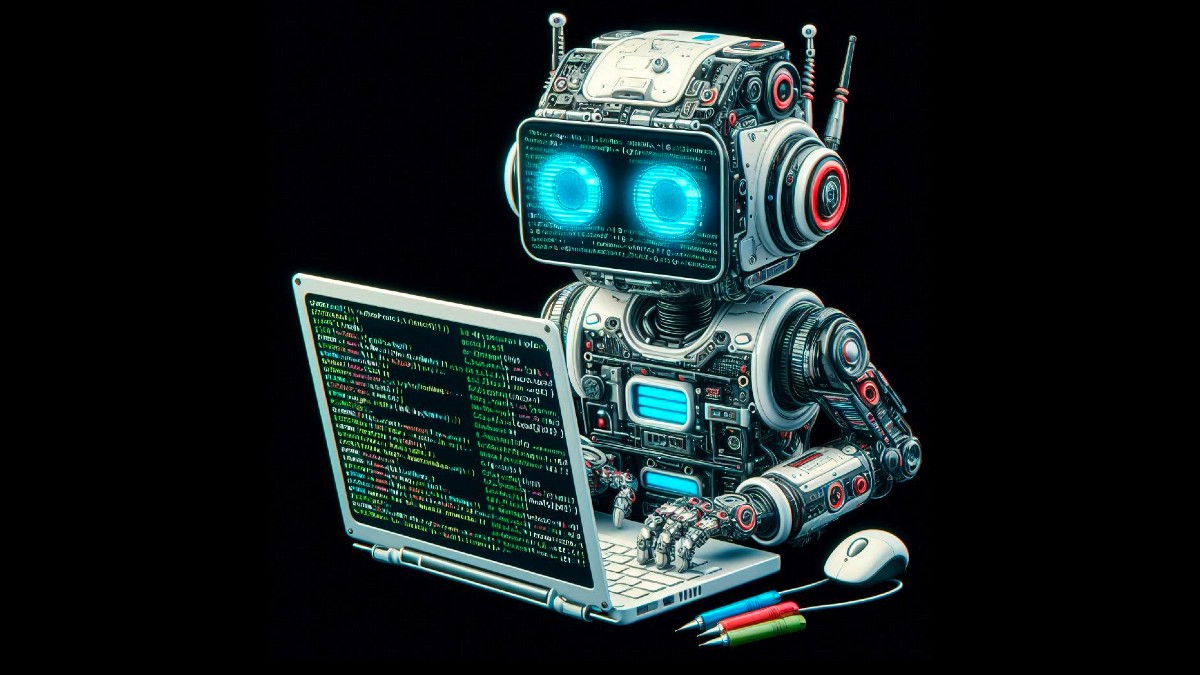
Software development has never stood still. From the earliest days of punched cards and assembly language to the advent of object-oriented programming and open-source collaboration, the craft of writing code has continually evolved in response to new pressures, new possibilities, and new demands. Yet few shifts in the history of computing have arrived with quite the force or the implications of AI coding. In a remarkably short span of time, artificial intelligence has moved from a curiosity at the edges of the developer’s toolkit to something that sits squarely at the heart of how software is conceived, written, tested, and maintained.
What AI Coding Actually Means
Before exploring what AI coding is changing, it is worth being precise about what the term actually describes. At its broadest, AI coding refers to the use of machine learning models — particularly large language models trained on vast repositories of source code and natural language — to assist in or automate the process of writing software. This assistance can take many forms. It might mean an intelligent system suggesting the next line of code as a developer types, generating an entire function from a plain-English description, identifying a bug and proposing a fix, or even drafting a full application from a high-level specification.
What distinguishes modern AI coding tools from older forms of code generation or autocompletion is the sophistication of the underlying models. These systems have been trained on billions of lines of code spanning dozens of programming languages, and they have developed a remarkably nuanced understanding of syntax, logic, common patterns, and even stylistic conventions. The result is AI coding assistance that can, in many cases, produce output that is genuinely useful rather than merely plausible-looking.
A Shift in Who Can Write Software
One of the most profound implications of AI coding is the democratisation of software development. For decades, the ability to build software was gated by a relatively steep learning curve. Aspiring developers had to invest considerable time mastering not just one programming language but the ecosystem of tools, frameworks, libraries, and conventions that surrounded it. This barrier was real, and it meant that the global pool of working developers, though large, remained a small fraction of the population that might otherwise have had something useful to build.
AI coding is beginning to erode that barrier in a meaningful way. Non-technical professionals — analysts, designers, scientists, educators, entrepreneurs — are increasingly able to describe what they want in plain language and receive working code in return. This does not mean that the role of the experienced developer is obsolete; far from it. But it does mean that the demographic of people capable of creating functional software is widening, and the consequences of that widening are likely to be felt across every sector of the economy.
Productivity Gains for Experienced Developers
For professional developers, the appeal of AI coding lies primarily in the productivity gains it makes possible. Studies conducted across a range of development environments have found that developers using AI coding assistance can complete certain tasks significantly faster than those working without it. The gains are particularly pronounced for routine, repetitive work: generating boilerplate code, writing unit tests, documenting functions, or translating code from one language to another.
These efficiency improvements matter because developer time is expensive and perpetually scarce. Most software organisations carry a substantial backlog of work that their teams simply cannot reach. AI coding tools offer one credible path towards closing that gap — not by replacing developers, but by allowing the same number of developers to accomplish considerably more in the same amount of time.
There is also a subtler benefit. By handling much of the cognitive load associated with low-level syntax and boilerplate, AI coding allows developers to direct more of their mental energy towards the higher-order problems that actually require human judgement: architecture, user experience, edge cases, security, and the complex trade-offs that define the difference between software that merely works and software that works well.
The Changing Nature of the Developer’s Role
It would be misleading to suggest that AI coding changes only the pace of development without affecting its character. In practice, the role of the developer is shifting in ways that are likely to become more pronounced over time. As AI coding systems become more capable of handling implementation details autonomously, the most valuable developer skill is increasingly the ability to specify, review, and orchestrate what those systems produce.
This represents something of a return to fundamentals. The core of software engineering has always been problem-solving and clear thinking — understanding what needs to be built and why, identifying the constraints and trade-offs, and making good decisions under uncertainty. What AI coding changes is the layer beneath those skills: the mechanical translation of thought into executable code becomes less of a bottleneck and more of a background process.
Developers who embrace this shift — who learn to work with AI coding tools as genuine collaborators rather than mere shortcuts — are likely to find themselves significantly more capable and productive. Those who resist it risk being overtaken not by the AI itself, but by colleagues who have learned to use it effectively.
Quality, Reliability, and the Importance of Human Oversight
No honest account of AI coding can ignore its limitations. These systems, however impressive, are not infallible. They can produce code that looks correct but contains subtle logical errors. They can hallucinate function names or library interfaces that do not exist. They can miss security vulnerabilities or generate solutions that work for the common case but fail in edge cases. These limitations are not trivial, and they underline the continuing importance of human oversight in any development process that incorporates AI coding.
The appropriate response to these limitations is not to abandon AI coding but to integrate it thoughtfully. Teams that treat AI-generated code as a first draft rather than a finished product — reviewing it carefully, testing it rigorously, and refining it with the same critical eye they would bring to any other contribution — can capture the benefits of AI coding while managing its risks. The developer’s role as a critical evaluator of code is, if anything, more important in an AI-assisted environment than it was before.
Ethical and Professional Considerations
The rise of AI coding also raises questions that go beyond technical performance. There are legitimate debates about the ownership of AI-generated code, the extent to which models trained on open-source repositories have obligations to the authors of that code, and the appropriate disclosure standards for software projects that make significant use of AI assistance. These are not merely academic questions; they have practical implications for how organisations govern their development processes and how the profession as a whole defines its standards.
There is also the question of what AI coding means for the future workforce. If AI coding tools continue to improve at their current rate, the demand for certain categories of developer work will inevitably shift. Junior roles that once served as the entry point into the profession — writing simple functions, fixing minor bugs, maintaining legacy code — may become less plentiful, even as demand for more senior, architectural thinking grows. The profession will need to think carefully about how to manage that transition in a way that preserves pathways into the field for the next generation of developers.
Looking Ahead
The trajectory of AI coding is difficult to predict with precision, but the direction of travel is clear. Models are improving, the range of tasks they can handle is expanding, and the tools built around them are becoming more sophisticated and better integrated into the workflows that developers already use. It is reasonable to expect that AI coding will continue to become more central to software development, not less.
What is less certain is the ultimate ceiling of AI coding capability. Can these systems eventually handle the full complexity of large-scale software engineering, or is there an irreducible core of human judgement that they cannot replicate? The honest answer is that nobody knows yet. What is clear is that AI coding is no longer a peripheral experiment. It is a fundamental feature of the technological landscape, and understanding it — its capabilities, its limitations, and its implications — is increasingly essential for anyone with a stake in how software gets built.
The developers, organisations, and societies that engage with AI coding thoughtfully and critically will be better placed to shape its development and to capture its considerable benefits. Those who ignore it will find themselves navigating a world of software development that has moved on without them.